


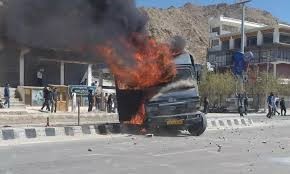

In a tragic escalation of tensions, four people died and 30 others sustained injuries during violent clashes between protesters and security officials in Leh, Ladakh, on Wednesday. The unrest erupted amidst a shutdown called by the Ladakh Apex Body (LAB), which advocates for greater autonomy and statehood for the region.
As protests intensified, police resorted to firing in an attempt to restore order. The protests arose in response to long-standing demands for statehood and the extension of the Sixth Schedule, which would grant Ladakh greater administrative autonomy. Demonstrators targeted a BJP office and several vehicles, leading to significant unrest.
Officials confirmed that the situation escalated rapidly after protesters became aggressive following the hospitalization of two hunger strikers on Tuesday evening. These individuals were among a group of 15 who had been on a 35-day hunger strike, protesting for statehood and the Sixth Schedule’s implementation since September 10.
The Ladakh Apex Body’s youth wing spearheaded the shutdown and protests, marking a critical moment in the ongoing struggle for political representation in Ladakh. The chaos that ensued has raised questions about governance and law enforcement tactics in handling civil unrest.
Eyewitness accounts and protesters claim that all four deceased were victims of police firing, adding to the allegations against local authorities regarding the use of excessive force. In response, Leh’s District Magistrate called for an emergency meeting to assess the situation and review police protocols during demonstrations.
This incident marks one of the deadliest clashes in recent memory in Leh, a region that has grappled with demands for statehood since its reorganization from a part of Jammu and Kashmir in 2019. The ongoing protests spotlight the local population’s deep-seated grievances over governance and rights.
Government officials have urged calm, emphasizing the importance of dialogue over violence. “We must find a way to address these issues through peaceful discussions,” stated a senior official from the Union Territory administration, underscoring the delicate nature of the region’s socio-political fabric.
The full ramifications of this clash are yet to unfold, as communities grapple with the immediate aftermath. As investigations proceed, the spotlight will remain on both the protests and the government’s response to the growing calls for autonomy.
The demand for statehood for Ladakh is not just a political issue; it embodies broader aspirations for self-determination and recognition among local communities. Within India, similar demands for administrative changes have often led to violent confrontations, emphasizing the need for empathetic governance that considers the voices of all stakeholders involved.
As the aftermath continues to develop, local leaders express hope for calm and a return to dialogue—a necessary step for healing and future stability in the region.