


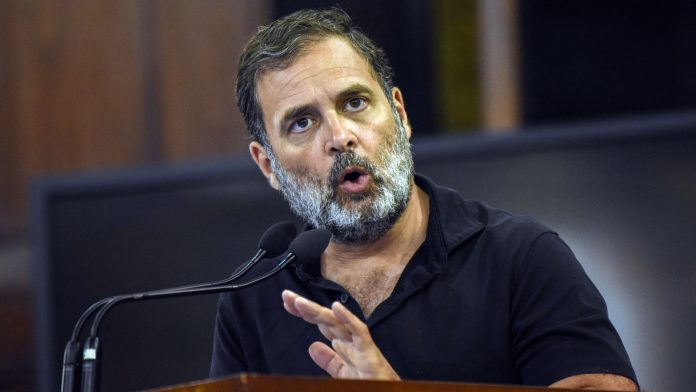

NEW DELHI, Sept 19: Congress leader Rahul Gandhi has accused the Election Commission (EC) of mishandling the electoral process by allegedly protecting individuals involved in vote theft. Gandhi’s remarks come amid rising concerns about electoral integrity in India.
His statement was made during a press conference on Friday, escalating his claims of “vote chori” (vote theft). He referred to the Election Commission as the “election watchman” who has failed to safeguard democracy. This intense criticism raises questions about the EC’s role in ensuring free and fair elections.
Gandhi’s Claims of Systematic Voter Deletion
Gandhi focused on specific instances in Karnataka, asserting that votes belonging to Congress supporters were being systematically deleted ahead of the assembly polls. He referenced data that reportedly revealed attempts to delete over 6,000 votes in the Aland constituency and an alleged fraudulent addition of nearly 7,000 votes in the Rajura constituency of Maharashtra.
In his post on social media platform X, Gandhi stated, “Wake up at 4 a.m. Eliminate two voters in 36 seconds, then go back to sleep – this is how vote theft happens!” This assertion vividly highlights his view of the serious threat posed to democratic processes.
Election Commission’s Response to Allegations
The Election Commission swiftly rebutted Gandhi’s accusations, labeling them as “incorrect and baseless.” In an official statement, they emphasized that no votes can be deleted online and insisted that Gandhi’s claims are misinterpretations of their operations.
As the political tension between the Congress party and the Election Commission escalates, many observers are paying close attention to the implications of these disputes for upcoming elections. Gandhi demands transparency and insists that the EC should comply with inquiries from the Karnataka Criminal Investigation Department (CID).
The Role of Youth in Protecting Democracy
In his latest addresses, Gandhi has rallied the nation’s youth, students, and Gen Z to protect democracy and the Constitution. He firmly asserted, “I always stand with them. Jai Hind!” This galvanization of youth not only reflects a strategy to mobilize support but also emphasizes the significance of their role in contemporary democracy.
Gandhi’s assertion draws attention to the political momentum built around youth engagement, a crucial demographic as elections approach.
The Political Landscape Ahead of Elections
As the political landscape heats up ahead of the elections, the dialogue surrounding election integrity becomes increasingly paramount. Gandhi has openly demanded that Chief Election Commissioner Gyanesh Kumar must account for the accusations and provide the necessary evidence to the Karnataka CID.
He warns that failure to address these issues will suggest complicity in what he terms the “murder of the Constitution.” Such statements can have significant implications for public trust in electoral bodies.
Experts in political science note that allegations of electoral misconduct can drive voter turnout, as they compel citizens to engage more critically with the electoral process. The ongoing scrutiny of the Election Commission could either bolster or undermine its credibility, based on how these allegations are resolved.
With Gandhi hinting at more revelations to come, it seems the conversation about electoral integrity in India is far from over. The coming weeks will be crucial as both political leaders and citizens alike await clarity on these significant allegations.